

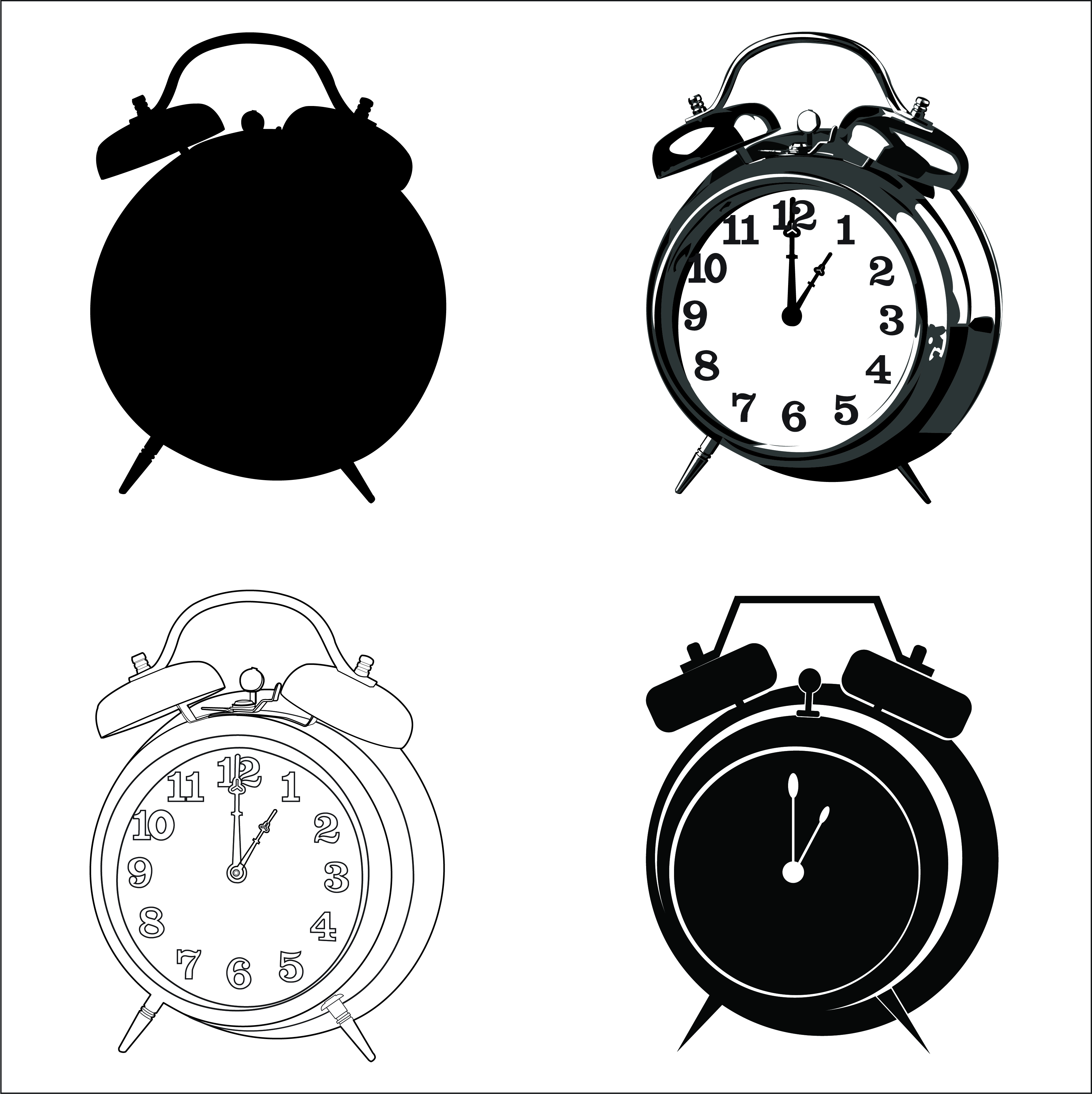



In my work, I explore the intersection of form, function, and perception through the lens of stylization. This series of images demonstrates the profound impact that simple alterations in visual representation can have on our understanding and interaction with everyday objects—in this case, a classic alarm clock.
1. **Abstract Essence**: The first image is a minimalist depiction, reducing the clock to its most basic silhouette. This simplification strips away all detail, focusing purely on form and evoking a sense of timelessness and universality. It challenges viewers to recognize the clock without the aid of familiar elements such as numbers or hands.
2. **Minimal Functionalism**: The second stage introduces a single hand and a hint of the clock’s structure, maintaining a high level of abstraction. This representation balances the abstract with a nod toward functionality, suggesting the passage of time without defining it strictly.Here, the clock’s form is more defined, yet it remains a silhouette. This stage bridges the gap between abstract representation and recognizable object, inviting viewers to fill in the details with their imagination. It speaks to the inherent human ability to recognize and complete partially shown objects.
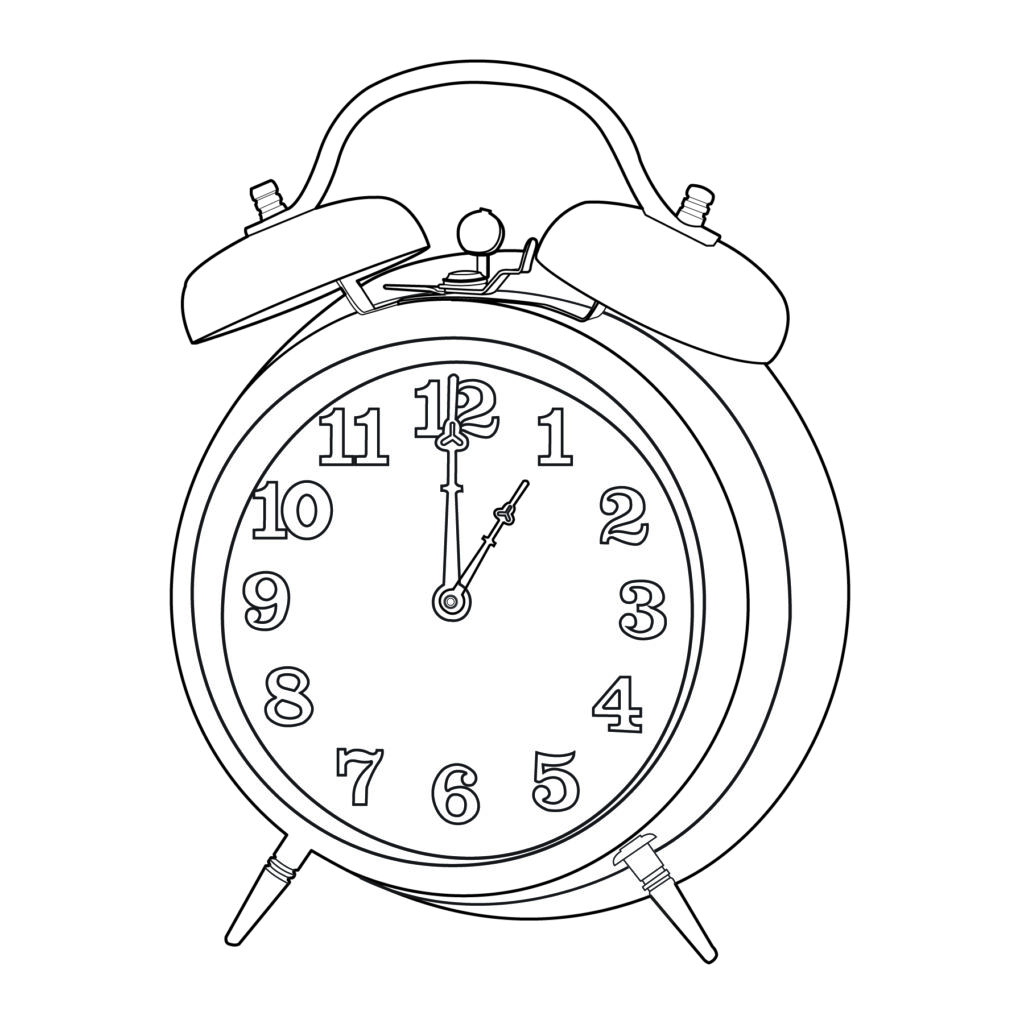
4. **Detailed Line Work**: The fourth image incorporates detailed line work, bringing clarity and precision to the clock’s face. The numbers and hands are now visible, grounding the object in functionality while retaining an artistic quality. This intermediate step highlights the beauty in precision and the elegance of detailed craftsmanship.
5. **Full Realism**: The final image represents the clock in full detail, showcasing its complete form and functionality. This progression to full realism emphasizes the importance of each component—every number, hand, and line—in conveying time. It underscores how the sum of detailed parts creates a universally understood object.
Through this series, I aim to demonstrate how stylization can transform perception, emphasizing different aspects of an object’s identity. Each stage of abstraction and detail invites viewers to engage with the object in unique ways, highlighting the dynamic relationship between simplicity and complexity in design. This exploration encourages a deeper appreciation for the nuanced ways in which we perceive and interact with the designed world around us.